

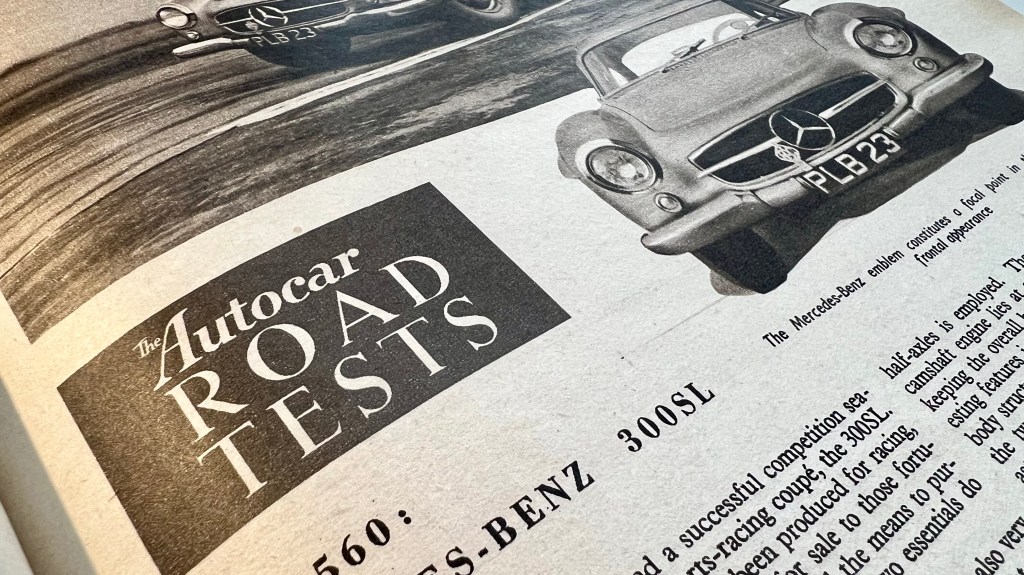
Cars. I bloody love them. And lists. It takes something very special to beat a good list. But… lists about cars? Oof! Few things in life are more satiating than a finely curated inventory of automotive facts and figures.
They’ve always fascinated me — even as a young lad when my peers were getting excited about the prospect of maybe getting picked for a local under-11s team, I’d be indoors poring over the data tables at the back of the latest issue of What Car? and faithfully recreating it on an A4 pad of graph paper. This was pre-Excel, mind — analogue spreadsheets were my bag.
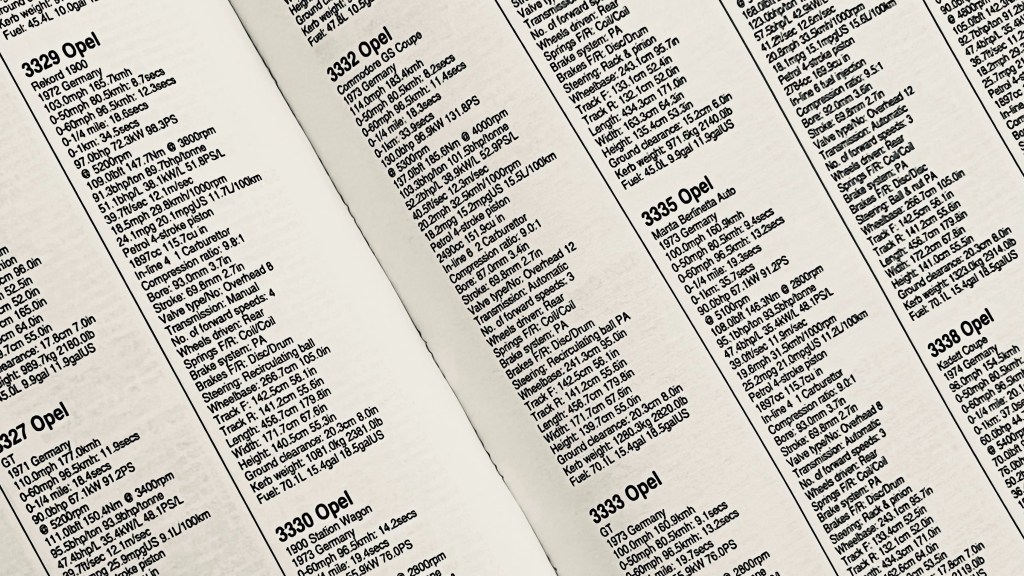
While I was conscious I was a bit different — and doubtless somewhere rather rainbowy on one spectrum or other — nobody really seemed to mind my peculiarities, so my fascination for amassing literal tonnes of car literature continued unabated.
1992: a landmark year for car-centric lists
If this isn’t resonating with you, dear reader, you’ll struggle to understand the sheer pleasure unleashed in 1992 when Ivan Berg’s World Car Record appeared in all good — and doubtless some mediocre — bookshops.
Here was a tome, as thick as a contemporary Yellow Pages, full of page after page of lists about cars. No pictures, barely any editorial content, but lists aplenty. Blissful. While it remains a worthy resident on a shelf of any car fan’s bookcase, there was something that soon frustrated me about it — everyone’s a critic, right?
You see, while it’s a fabulous testament to the hundreds of hours of research Berg undertook, I wasn’t a fan of how the road test data from Britain’s Autocar magazine had been merged together with that of America’s Road & Track, with little to give away which was which as one carefully studied the lists.
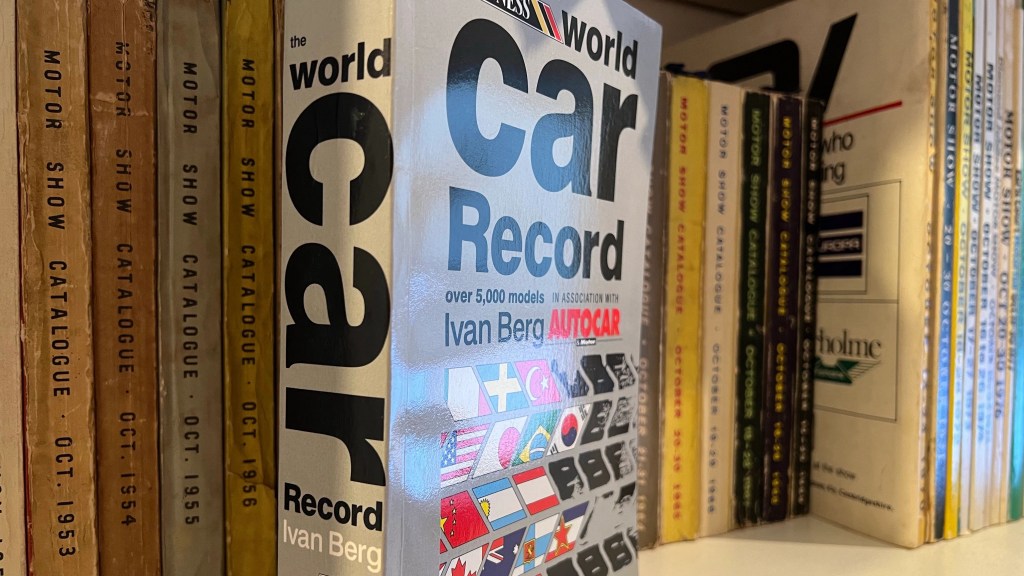
Even now, I’ll read a magazine or website feature where the author’s cribbed key points from Berg’s book, inadvertently using different, often lower, power and performance figures from a North American market version, rather than a full-blooded Euro-spec model.
Introducing the Autocar Road Test Record
Back in 1992, my decision was made: ‘one day, I’ll do my own version of that’. And so, a smidgen over thirty years later, that’s exactly where I am with my take on the genre, with its suitably matter of fact title — the Autocar Road Test Record.
Not only does it serve as a suitable update to Berg’s original, encompassing an additional three decades of statistics, it only covers cars road tested by Autocar — including its years as The Autocar and Autocar & Motor, naturally.
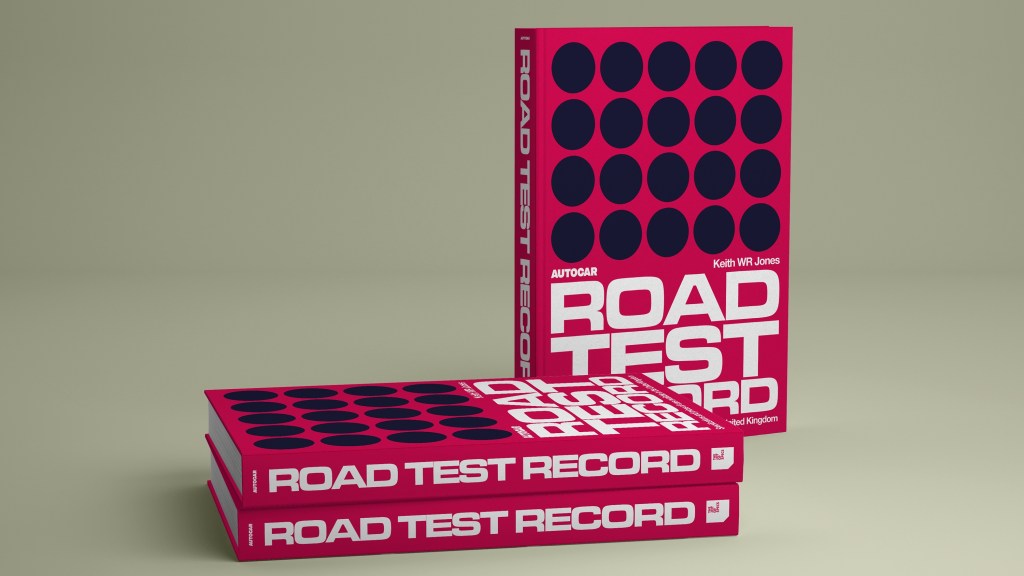
Inevitably, its appeal is going to be first and foremost with people wired similarly to me — if cars and lists are you thing, you may struggle to contain yourself awaiting its publication, which is set to be before the end of 2025.
Like Berg’s version, it will be free of car photography yet indulgently lush in tabulated data, amplified further graphical representations of automotive trends, as well as helpful passages of editorial to contextualise the raw facts and figures.
There’s no such thing as too many lists
As with its forebear, the book will be divided in two sections. While one half will serve as a collated celebration of key road test data points from Autocar’s illustrious history, the other will be a collection of tables and charts representing extrapolated and combined data.
So, if you want to know how gently the Nuova Fiat 500 darted from 0-50mph in 1957 you can do so in isolation, as well as seeing where it ranks alongside other cars tested that year, that decade or across the whole century the book covers.
For certain nameplates — of which the aforementioned Fiat 500 is one — there are also comparisons with other models of different eras wearing the same badge. It’s particularly fascinating to see which GTI-badged models and different types of Porsche’s 911 lineage had dismal acceleration times and low top speeds.
Plus there are scores of other curious combinations: interested in the top 25 cars tested which were taller than they were wide? Of course you are, but you’re doubtless also eager to discover the 25 models with the shortest wheelbases in relation to their overall length or perhaps the worst power-to-weight ratios of those still capable of a top speed in excess of 155mph.
Now you can get involved, too
While I can’t promise to include every data point permutation in the finished publication, I’m keen to hear what potentially interesting combinations you’d like to see included — drop me a line in the comments section at the end of the post and you have my assurance that I will look to see whether they conjure up some fascinating results for inclusion.
Perhaps most remarkably of all, legitimising this outrageous manifestation of nerdiness is none other than the living legend among motoring journalists, and Autocar lifer, Steve Cropley. In addition to agreeing to write the foreword, Steve’s been a remarkable asset behind the scenes to help make the book a reality.
If you’re already salivating at the thought of owning a copy, then consider yourself among friends, for people like you and I are not alone. However, there is still some time to wait, but as soon as I’m in a position to make it available to buy directly through this site, I’ll be sure to share the news far and wide, both here and across social media — your efforts to further spread the love would be sincerely appreciated.


 The Joy Of Specs
Leave a comment