
This series shines a spotlight on cars which are frequently forgotten, misremembered, misunderstood or maligned, many of which were unique to the UK market.
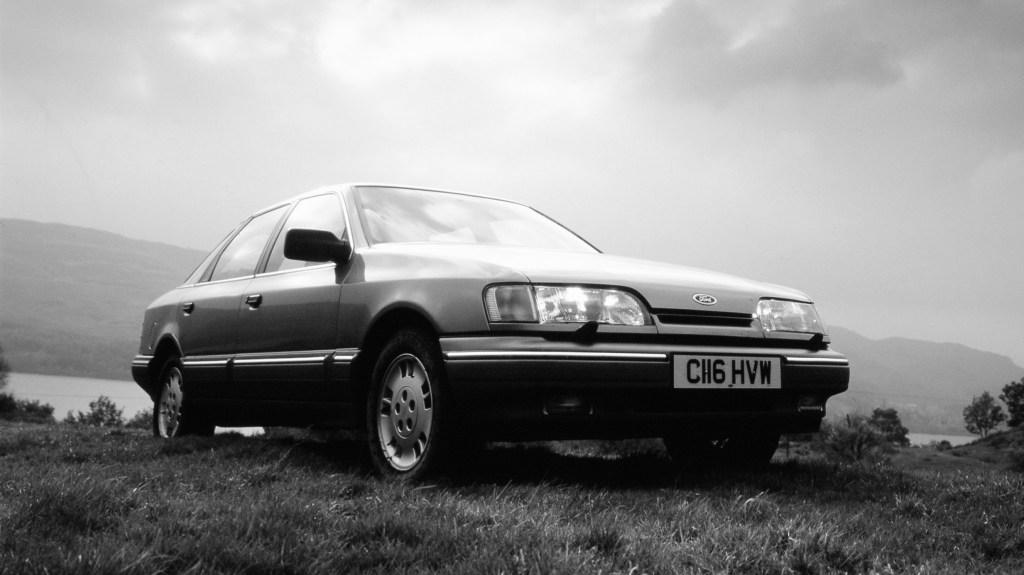
Have another gander at the picture at the top and identify the car.
Taking you’ll recognise its shape as a given, your location will more than likely have influenced your response.
Dwellers of the British Isles are most likely to recognise it as a Ford Granada, while those in mainline Europe will instead suggest it’s a Ford Scorpio.
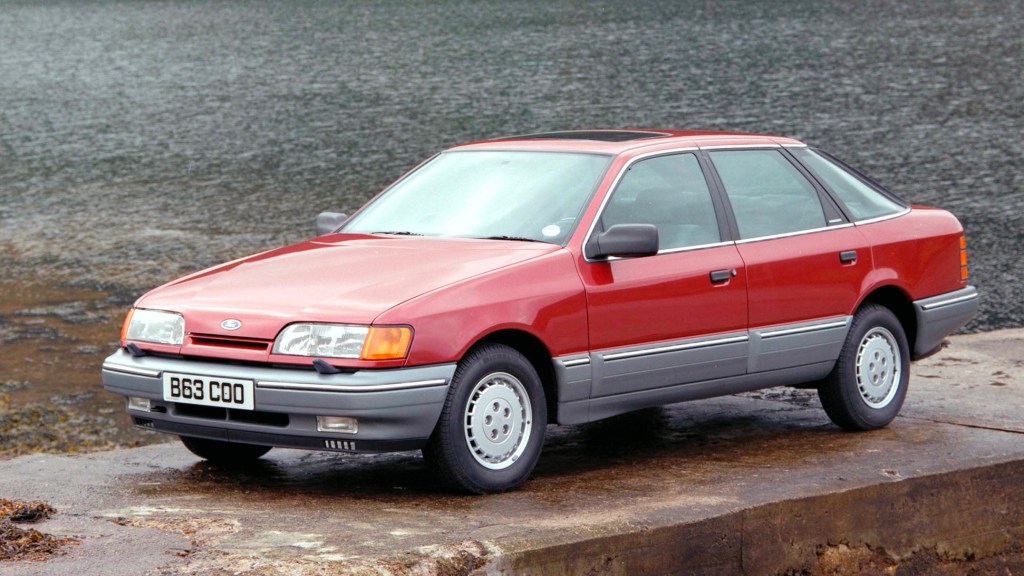
Those of North American persuasion, with a niche interest in European veeheecles will also see a Scorpio, but a Ford? Hell, no — that’s a Merkur. To the relief of those on this side of the Atlantic, I’ll save that lesson for another day.
Granada or Scorpio — which is it?
I’ll ask you that at the end of this blog, but to make it fairer, here’s the abridged backstory.
Just as the radical-looking Sierra had ousted the comparatively conservative Cortina — in the UK, anyway, it was the Taunus elsewhere — Ford’s chiselled second-generation Granada was set to give way to something altogether different in 1985. A hatchback.
Okay, its styling wasn’t as daring as its smaller sibling, but the switch to a solitary choice of a five-door hatch bodystyle was nevertheless perceived as a risk in the ‘executive class’. Not that the Ford would be unique, as it was an avenue explored for years already by Renault and Rover; Saab joined the fray in 1984 with its 9000.
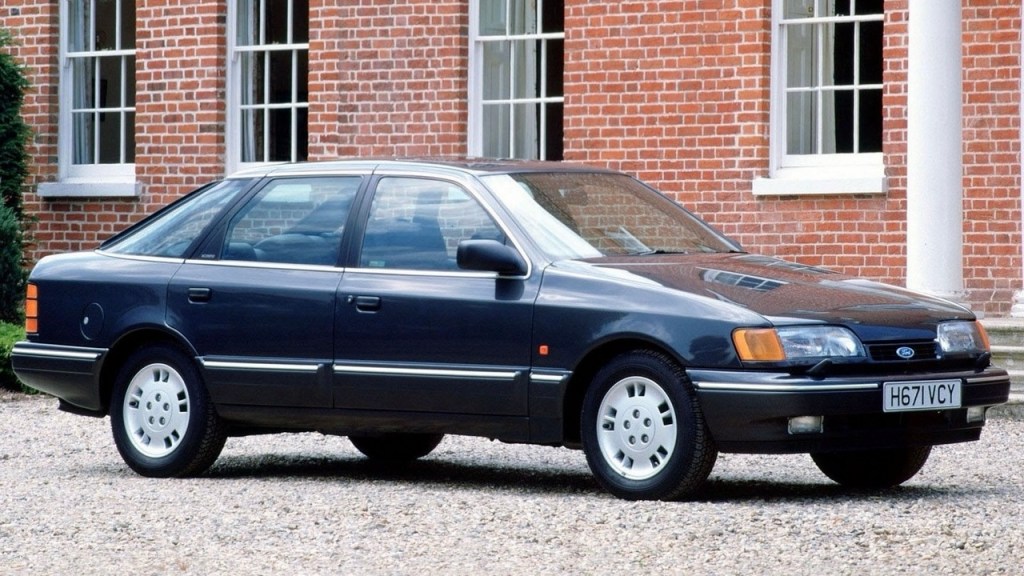
Nevertheless, so significant was the change that Ford’s European top brass decided it important to celebrate the difference by ditching the Granada name, replacing it with Scorpio.
Meanwhile, in the land that likes to do things differently, often to be contrary, it was perceived that dropping the Granada name might further alienate customers who would already be finding the notion of a glassy tailgate difficult to swallow, so it was retained for Britain and Ireland.
Hang on, Scorpios were sold in the UK, though?
They were, but not as a standalone model range. At least from Day 1, anyhow.
For the UK, the third-generation Granada was launched with a trio of trim levels: GL formed the entry point, Ghia was relegated to mid-hierarchy and in the range-topping derivative was Scorpio.
Yes, the Blue Oval’s European flagship’s new name was relegated to the rank of a specification grade in Britain. Some dignity was preserved courtesy of it solely being available with ythe largest 2.8 EFi V6 engine and standard four-speed automatic transmission, with a five-speed manual a no-cost option.
Scorpios were given a fuller roster of standard equipment, too, including sumptuous velour upholstery, an ‘all electronic’ stereo radio cassette, power-adjustable seats front and rear, plus that newly fangled winter godsend, the electrically heated windscreen. Away with you, Mr Frost.
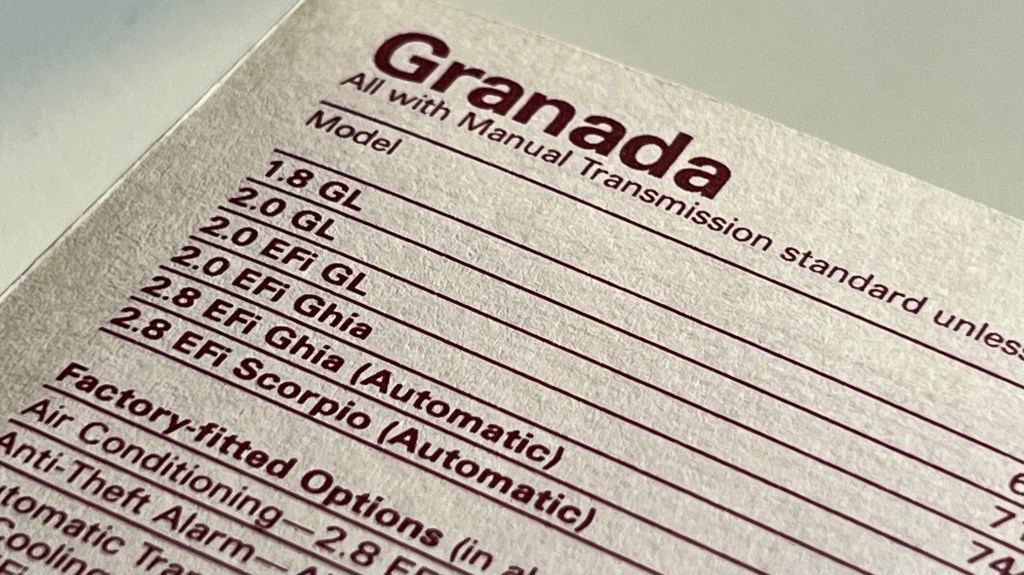
Mind you, at £15,550 in May 1985 – that’s around £46,500 in April 2024 terms – you’d expect the Granada Scorpio to be loaded, especially given the entry-level 1.8 GL was just £8,514.
Externally, there were few differentiators between the three. Ghia versions had different wheel trims to the GL, plus the usual smattering of shield-shaped logos. Scorpios boasted thicker chrome-look strips within its bumpers and bodyside mouldings, disc-like alloy rims and a slender plinth beneath the tailgate’s Granada badge bearing the Scorpio name.
Okay, that deals with Granadas and Granada Scorpios, but what about standalone Scorpios?
Maintaining the status quo is rarely an option in any aspect of life, a notion particularly true in the car industry.
With key European rivals launching new competitors in 1986 – Rover’s 800 and Vauxhall’s Carlton, followed by its larger Senator stablemate in 1987 – Ford had to ensure its still-young Granada and Granada Scorpio remained front and centre of customers’ minds.
By October 1986, Ford had expanded the engine range to include a Peugeot-sourced non-turbocharged 2.5-litre diesel, launched an even cheaper L specification and introduced four-wheel drive versions of its 2.8-litre petrols at the pricier end of the scale.
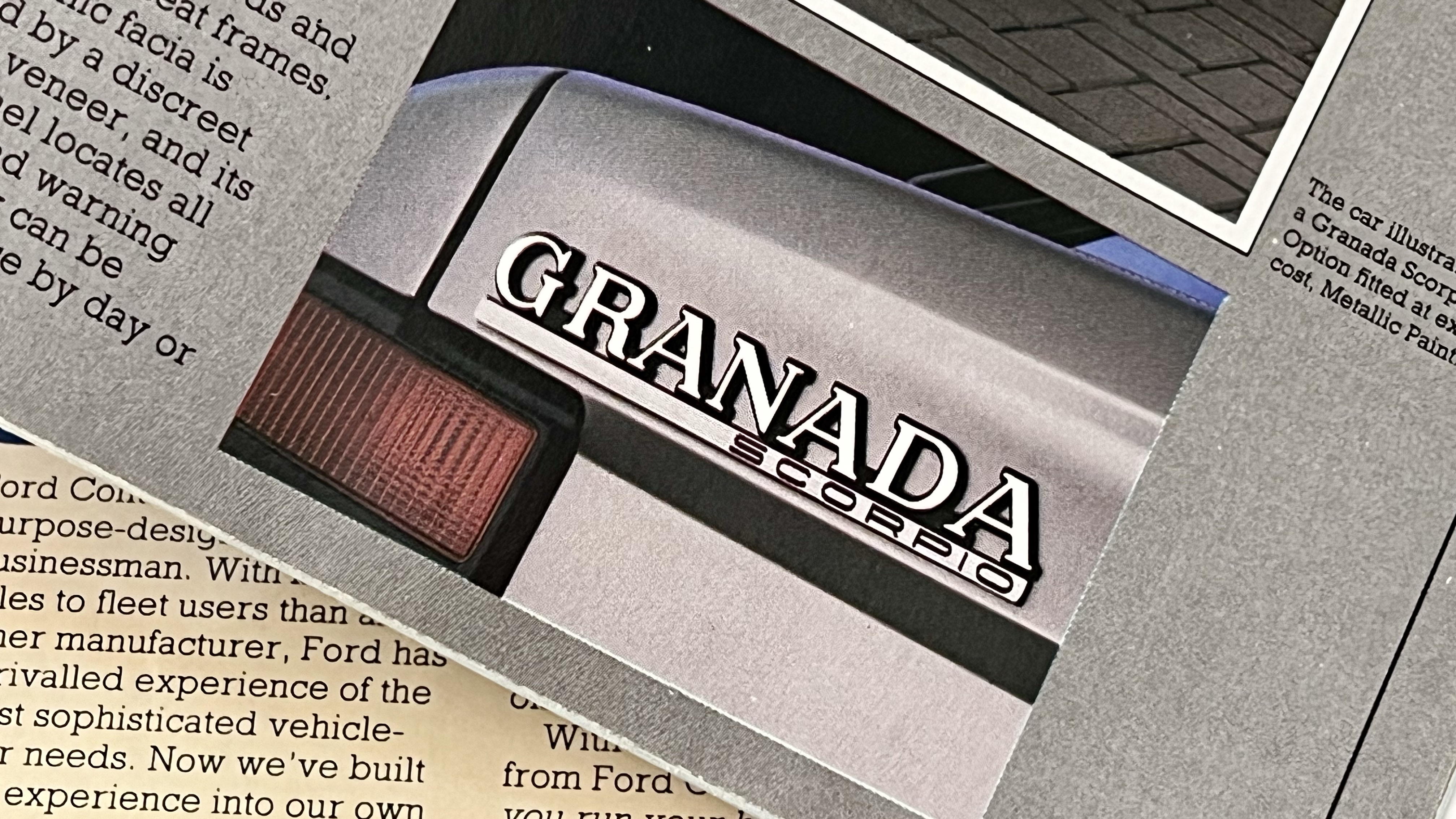

Something else also occurred at this point — a switch so subtle that its significance was underplayed. With no fanfare, the top-flight models’ tailgate badge arrangement was swapped around: Scorpio became the larger font with Granada relegated to the silvery strip beneath.
Eh? The Granada Scorpio became the Scorpio Granada? I don’t remember that
You won’t, because that wasn’t how it was marketed. Flick through any Ford range brochure from the end of 1986 onwards and you’ll see reference to Granadas and Scorpios, but no more Granada Scorpios and never Scorpio Granadas.
Just as Ford had done at various points in its large car history, near-identical looking cars were sold with different names, blurring the boundaries between models in their own right and trim levels.
Yet, by virtue of Scorpios still wearing Granada badges, they could nevertheless be counted in the UK sales charts collated by the SMMT as one and the same. Cheeky.
Beyond the name change, product development continued at pace for the two ranges; the diesel gained a turbo, the 2.8 gave way to a 2.9, with a 2.4-litre V6 bridging the gap between it and the 2.0-litre versions.
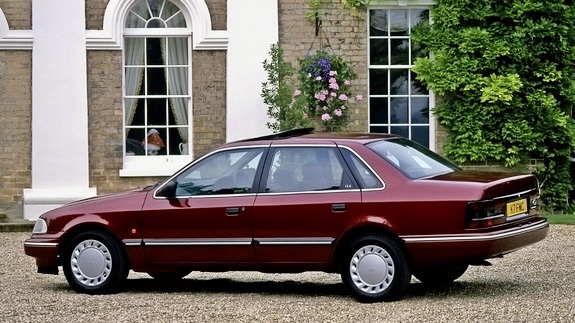
Bigger news arrived at the start of 1990, four-and-a-half years into the model cycle, when the traditionalist-sating saloon arrived. Its lineup mirrored the hatch’s, meaning it was available as both a Granada and a Scorpio, the latter still wearing that additional — whisper it — Granada badge.
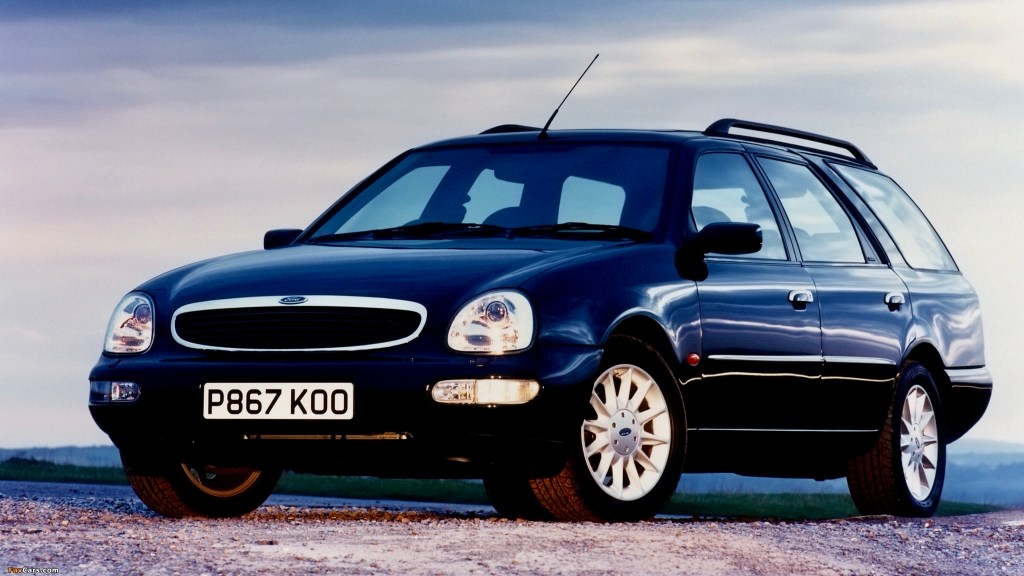
Ford wasn’t done there. A Cosworth-fettled 24-valve V6 arrived in time for Christmas 1990, while an estate bodystyle was previewed towards the end of 1991. It didn’t go on sale until the following spring, by which point it, together with the existing hatch and saloon, were given a mild makeover.
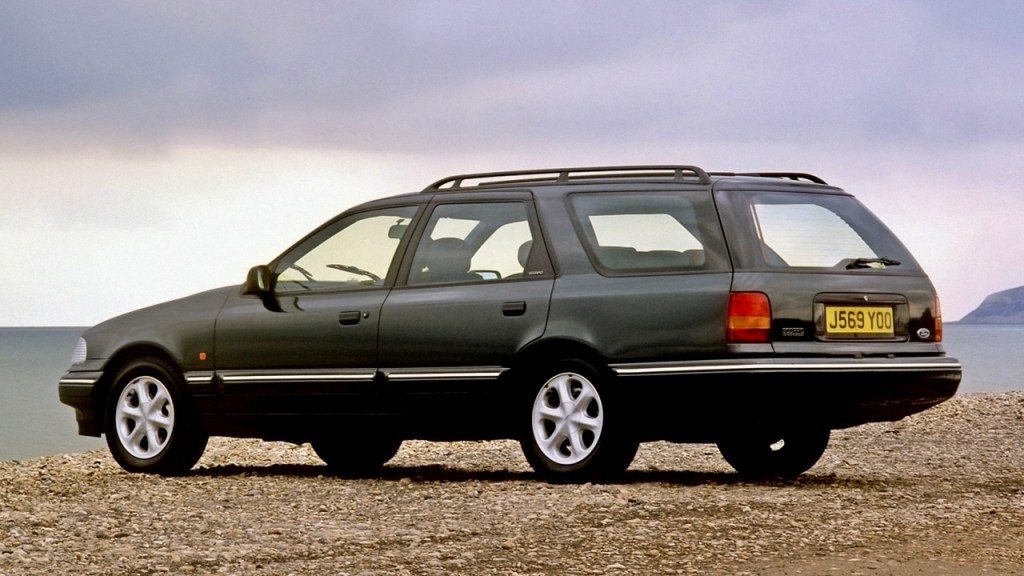
A slabbier dashboard replaced the low-level original inside, but outside there was bad news for gingicator enthusiasts: clear lenses appeared up front, smoked ones at the rear.
And the badge situation from that facelift?
Granada. And Scorpio… erm, Granada.
But the marketing message remained as resolute as it had since the 1986 change, ensuring the Scorpio’s suffix stayed silent.
Give me strength! So was there ever a Scorpio-Scorpio sold here?
Yes! Arriving towards the end of 1994, another facelift was introduced. Actually, facelift doesn’t really have sufficient gravitas for the changes Ford made.
Out went the handsome but unexciting lines, replaced by a broad, grinning grille, Marty Feldman-inspired headlights and — for the saloon — a rounded rump, with a red light and reflector strip wrapping around the full width of the tail.
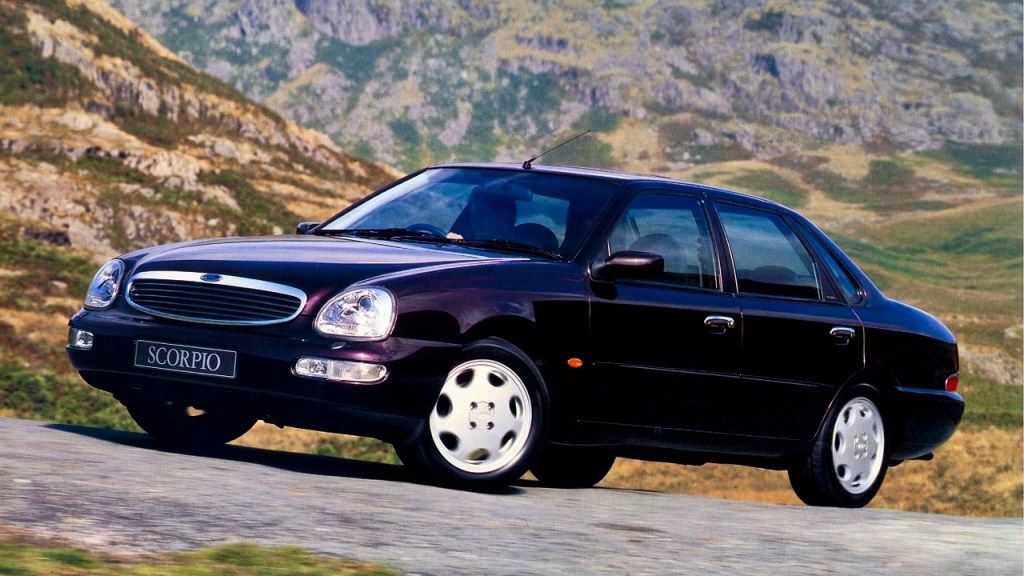
And so much brightwork. Ford had given its retrained Euro-exec more than a smattering of Lincoln-esque glitz. That’s Lincoln as in Ford’s Cadillac-rivalling marque in North America, not the city in eastern England.
Ford treated the interior to a swanky new dashboard, providing you could stomach all that faux walnut veneer. Fans of ruched leather surely punched the air in delight as its presence continued.
Save for a some small tweaks, the rear of the estate’s styling was largely untouched, while the hatchback… Well, that was discontinued. As were two other components: Granada as a model name and as badge beneath Scorpio.
Almost a decade after the resistance began, Scorpio became the pan-European name for Ford’s largest model.
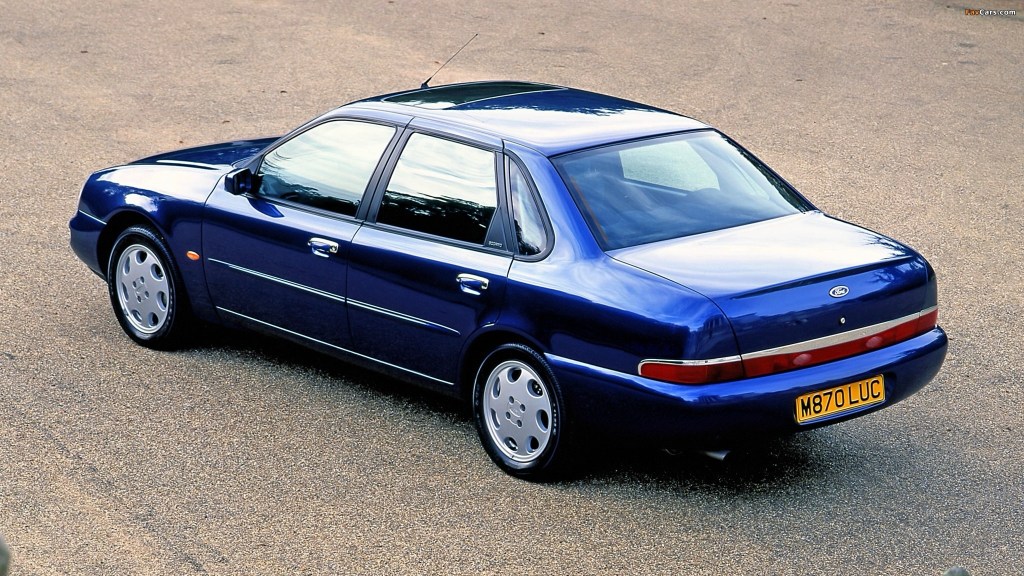
Not that it was a particularly happy story from that point on. Customers were confused — or appalled — by the Scorpio’s appearance, opting instead for well-specced Mondeos, Galaxy MPVs and, occasionally, Maverick SUVs instead.
Even a further facelift, which may as well have been known as Operation Dechroming, couldn’t arrest the decline.
Less than four years after the Scorpio-Scorpio’s introduction, six decades of large European Ford lineage drew to a close.
So, now you know your Granadas from your Scorpios — and your Granada Scorpios from your Scorpio Granadas — look again at the picture at the top because you can answer with confidence.
Assuming the photo was from before October 1986, of course, otherwise we’ll never know.

 The Joy Of Specs
Leave a comment