

This series shines a spotlight on cars which are frequently forgotten, misremembered, misunderstood or maligned, many of which were unique to the UK market.
Full disclosure: I make no apologies for stating this – I regard the second-generation Vauxhall Astra as a great-looking compact family car.
Particularly in three- and five-door hatchback forms, and especially in racier GTE guise, there’s a visual rightness about it. Balanced, pert, free from overwrought detailing and addenda, to my mind it’s a fine example of styling, and a credit to the skills of Gordon Brown (no, not that one) and his team.
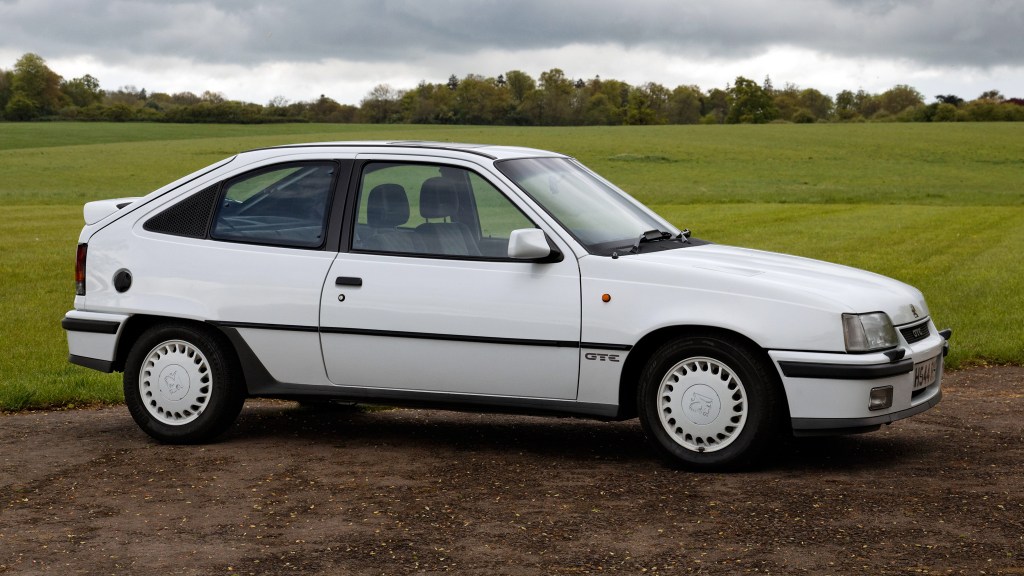
Does it, as CAR Magazine suggested 40 years ago, also look like a first-generation Astra that’s been squeezed out of a toothpaste tube? Absolutely, but I don’t consider that to be a slight. It was the early-1980s, guys – and the aero-look was most definitely ‘in’.
Hmm, I’m sure almost everyone’s heard of the Astra, though…
Absolutely, they have, not least because it’s been one of the best-selling nameplates in the UK since its introduction.
As the second Astra range was conceived by then owners General Motors as a model with global reach, the T85, as in was internally known, was built on multiple continents under a variety of brand and model names.

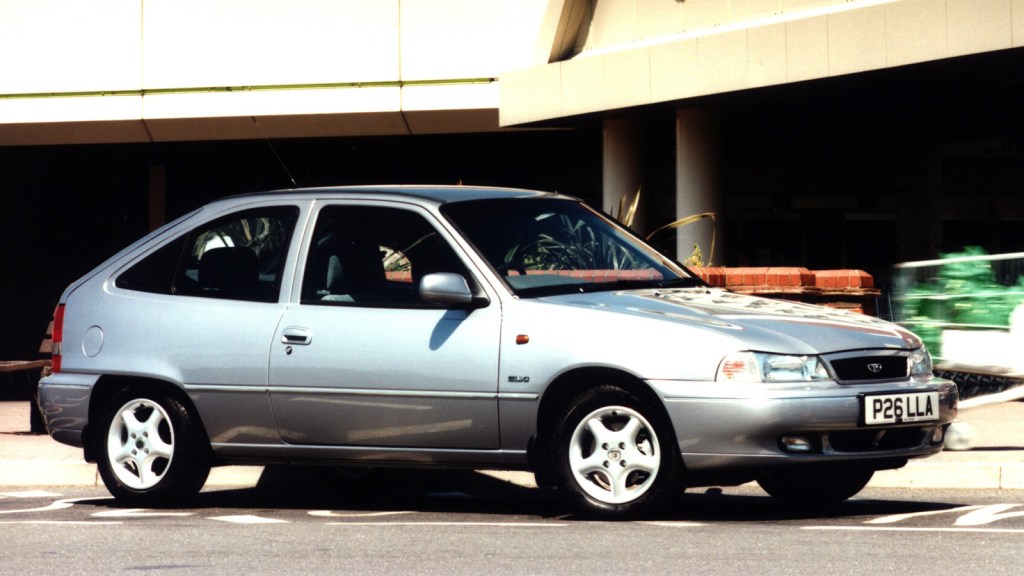
Elsewhere in Europe it was the final iteration of Opel Kadett, while a heavily facelifted version returned to the UK in 1995 as the Korean-built Daewoo Nexia.
So the forgotten Mk2 Astra was a Daewoo?
No! Don’t jump the gun – I am still referring to a Vauxhall-badged second-generation Astra sold in the UK.
Then you’re going to have to help me out with this one
Permit me to be your guide.
Four second-generation Astra bodystyles were launched in the UK in October 1984; the hatchbacks referenced above, plus capacious estate alternatives, all with three- and five-door options.
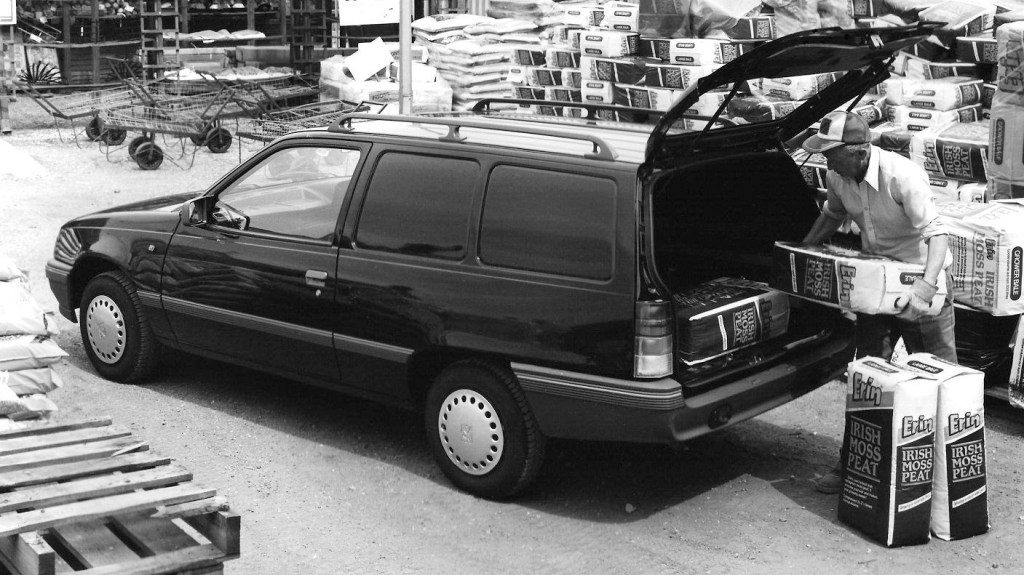
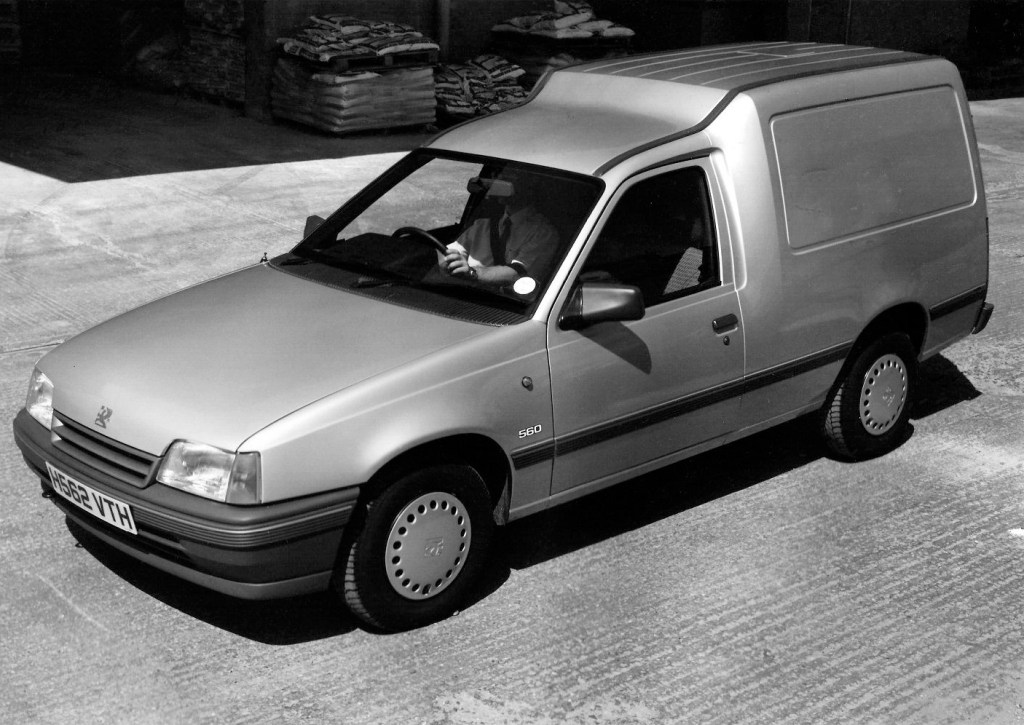
Also part of the launch line-up was the Bedford Astra Van. Based on the three-door estate shell, its silhouette was identical to the car it was derived from, save for a lack of side glazing aft of the doors.
Expansion on the commercial side was the first market development with the summer 1985 debut of the Bedford Astramax. To most intents and purposes, the bodywork from the cab forwards mirrored the Astra Van’s, but rearwards the taller, wider metalwork increased the Astramax’s carrying capacity, with wide-opening twin rear doors further boosting its practicality potential.
Both commercial Astras were rebadged as Vauxhalls in summer 1990 when the Bedford brand was retired.
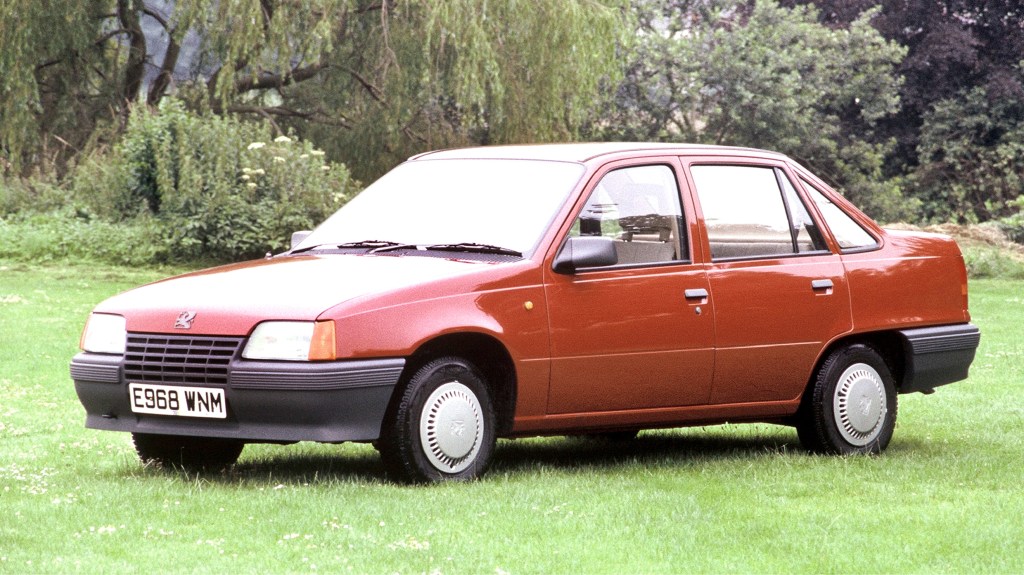
January 1986 marked the arrival of the four-door saloon version of the Astra, although it initially did without that name, being sold instead as the Vauxhall Belmont. Presumably, this mattered to all-important fleet buyers, helping them to understand it was a direct competitor to Ford’s Orion and Volkswagen’s Jetta, neither of which shared their hatchback siblings’ names.
Interestingly – he says, irony-free – the Belmont was a traditional ‘three-box’ saloon, with an elongated boot making it almost nine inches longer than the hatchback. It was a distinctly different approach compared with the original Astra; from the side, Mk1 saloons and hatches had identical profiles. It was only when you clocked the rear when the former’s shallower back window and deeper bootlid – complete with visible hinges – became obvious.
Revealed later in 1986, and on sale from the start of the following year, was the two-door Astra convertible, built in Italy by Bertone. Almost four decades on in the mid-2020s, soft-tops have fallen almost completely out of fashion, so the notion of an open-roofed Astra seems an odd one, yet at the time GM was late to the convertible party, with rivals from almost every mainstream brand already established.
No, the Astra’s hood didn’t fold back under a flat tonneau cover to preserve a sleek deck when roofless and yes, body strengthening was conspicuously aided by the fixed roll hoop linking the B-pillars, but as the majority of the convertible’s rivals were similarly afflicted, would-be buyers accepted such matters as the norm, however begrudgingly.
But, I know all of those Astras – where’s the one I don’t?
Patience is a virtue, they tell me, and the forgotten Astra appeared later on in the second-generation’s life cycle.
Introduced in January 1989, the Astra was revamped with a slew of steering and suspension tweaks, bringing worthwhile handling improvements judging by contemporary reviews.
Gordon Brown’s original styling was also gently updated by his successor, Wayne Cherry. Reflecting the aforementioned rightness of its shape – and presumably also to minimise expenditure – there were no sheet metal changes. Instead, the visual makeover largely consisted of reprofiled bumpers, with the front one housing a smaller, separate grille panel.
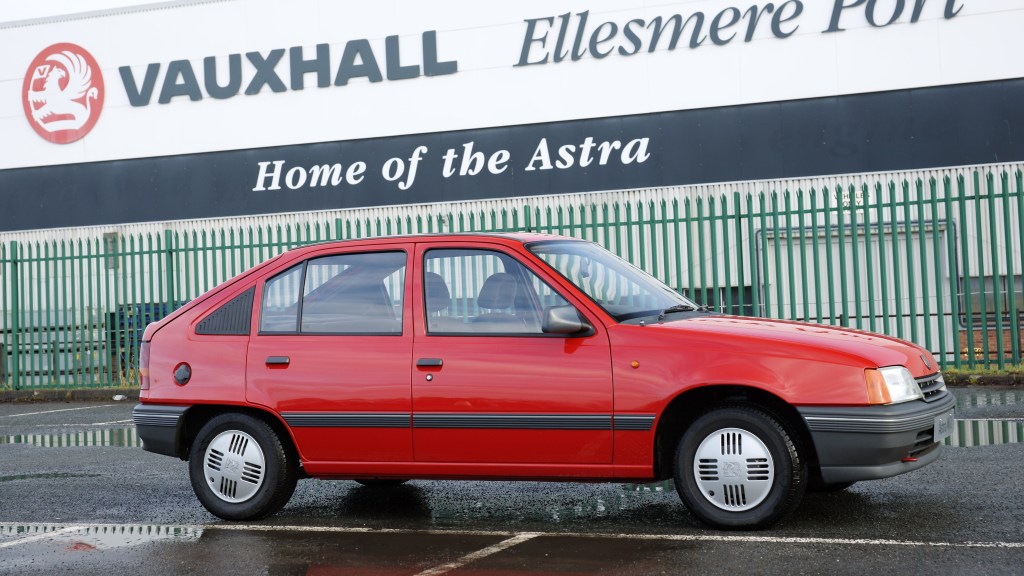
In an attempt to boost the appeal of the traditional booted version, Vauxhall’s marketing department renamed it Astra Belmont, the latter part of the title relegated to subscript level on the boot badge.
Nevertheless, as a sop to customers who still perceived four-door models as being a cut above blue-collar cars with a tailgate, Astra Belmonts featured a ‘chip-cutter’ grille design, mimicking the flagship Senator.
As per industry conventions, Vauxhall took the opportunity to refresh the Astra trim levels, including introducing the plusher CD grade, with all of the previous six car bodystyles continuing.
But, to out-of-context quote Yoda from The Empire Strikes Back, ‘there is another’.
Err, you what?
Until that facelift, Belmonts were solely saloons, while all estates were exclusively Astras.
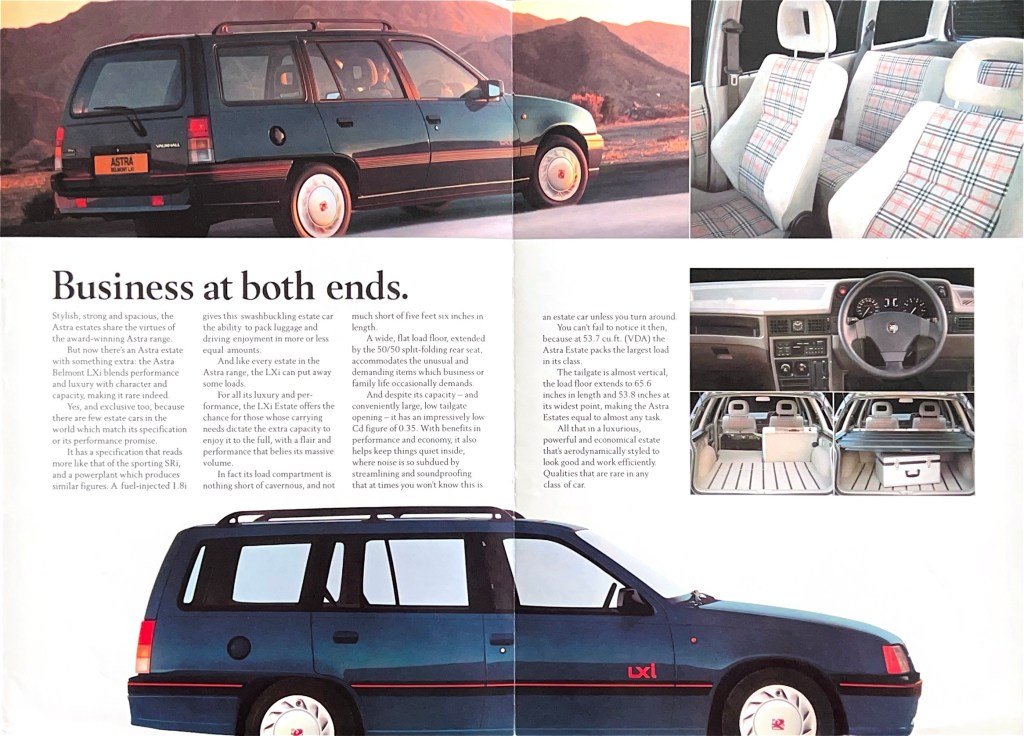
Which makes the January 1989 introduction of the five-door Vauxhall Astra Belmont estate, particularly baffling – not least because it was a single-derivative line-up.
Its introduction marked the first time Vauxhall had fitted the punchier, 112PS fuel-injected 1.8-litre petrol engine into the estate bodyshell, enabling a 118mph top speed.
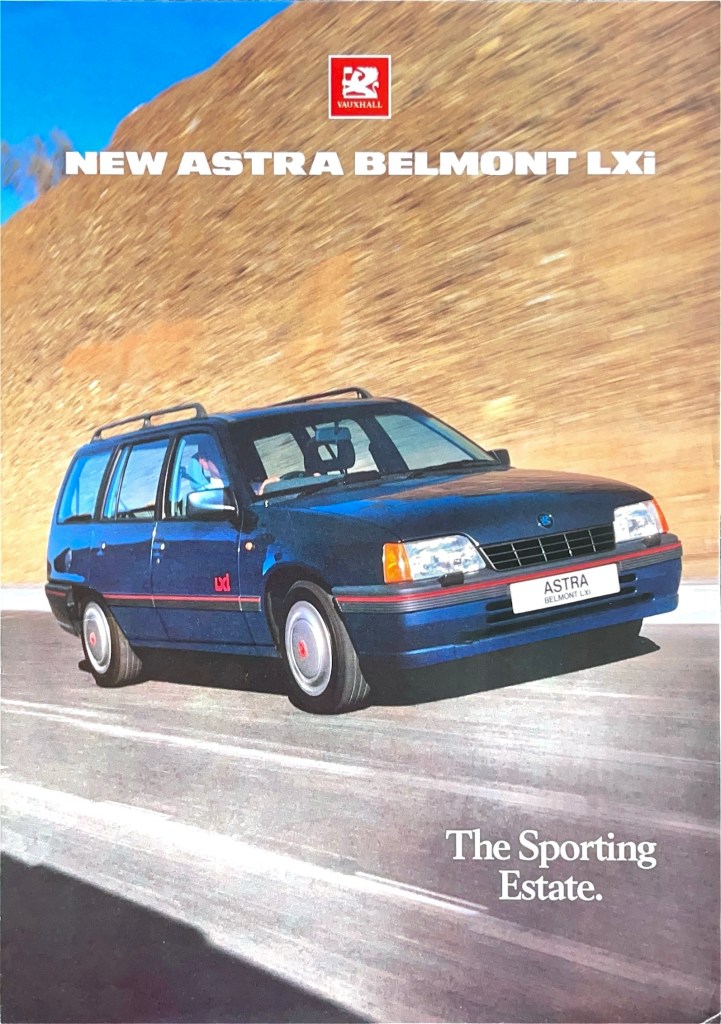
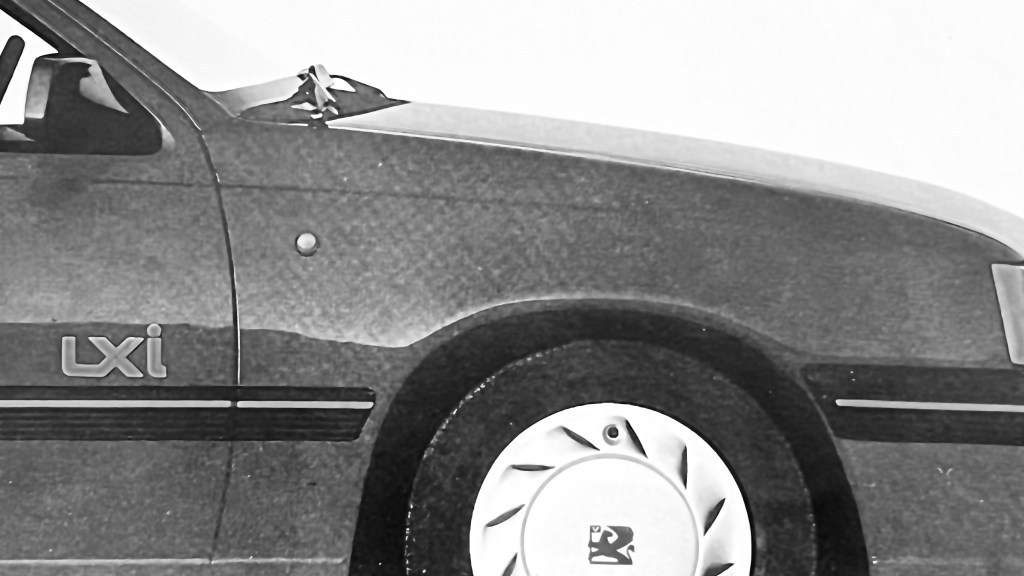
Adding further coals of confusion to this mysterious fire, although it boasted all of the period sporty accoutrements one expected to find, such as deeper, body-coloured valances and side skirts, scarlet bumper and side moulding inserts, plus plaid upholstery for the heavily bolstered front seats, aping the appearance of the hatchback and saloon SRi models, Vauxhall bestowed the Astra Belmont estate with the standalone LXi moniker.
Okay, the LXi missed out on some of the SRi’s kit, reflected in a price differential at launch, but even so, the whole escapade felt disjointed then, let alone with the benefit of hindsight.
Was the hope that by adding the Belmont badge to an Astra estate body it would be perceived as being more upmarket, with potential for it to be charged at a higher, more profitable price? That would appear to be the most logical conclusion.
Yet, presumably the same people who made that decision also felt an estate couldn’t wear the SRi label without sullying the exclusivity sought by customers of the hatchback and saloon versions.
So, why has the Vauxhall Astra Belmont LXi estate passed me by?
Almost entirely down to its lack of mission clarity, which meant various touchpoints would have interpreted what to do with it differently.
Retailers would have struggled to convincingly explain the strategy to customers, who would likely be of that ‘Belmont = saloon, estate = Astra’ mindset, while virtually every contemporary motoring magazine regarded the Astra Belmont LXi as sportier Astra estate, not a separate range.
Even now, poring over different sources of car specifications data, inconsistency abounds regarding this model.
It’s not impossible some within the industry spotted the Belmont name in the price list, assumed it was a misprint and chose to ignore it.
As is often the case when such confusion reigns, common sense eventually prevails – usually, anyway – and in this instance that moment can be dated to September 1990.
With the third-generation Astra still a year away, Vauxhall gave the Mk2 a final hurrah with a further rejigging of engines and trim levels.
Not only did this see the former LXi and SRi grades give way to SXi across all bodystyles, consistency was reinforced with the removal of the Belmont name from the estate version.
Twenty-one months as a standalone, single-derivative model range, yet here were are 35 years later celebrating its existence. Perhaps Vauxhall’s marketeers were playing the long game.
If you missed the first two forgotten Vauxhalls I covered on the blog, then catch up on your automotive history by learning about the Albany people carrier and the luxurious Elite.


 The Joy Of Specs
Leave a reply to David Wilkins Cancel reply