

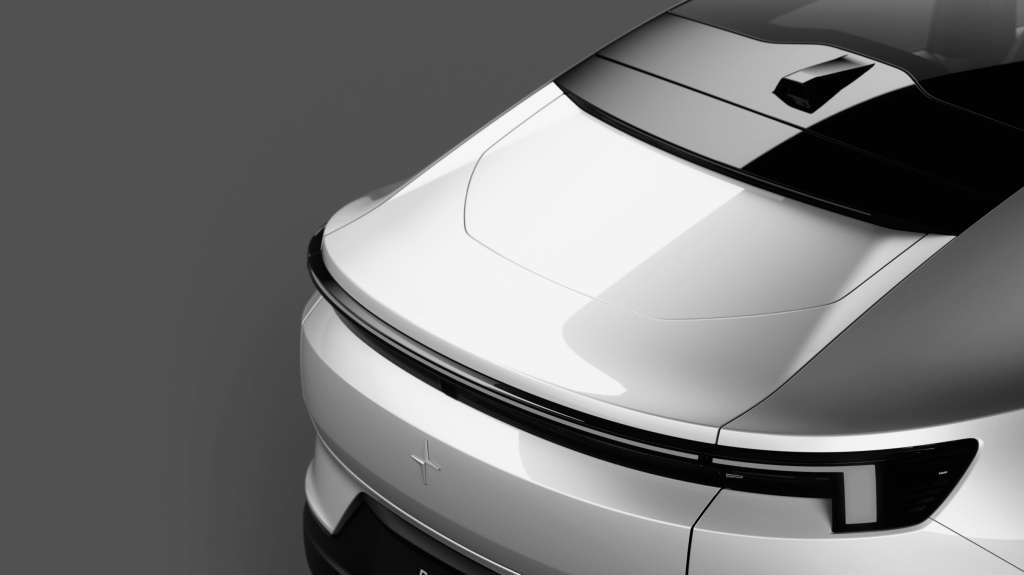
Fourth in the sequence of standalone Polestar models is – logically enough – the 4, but its convention-breaking window-less rear is causing me much teeth-grinding and hair-pulling as I endeavour to answer what should be a simple question: how many doors does it have?
Industry word is that in the coming years we’re likely to see more than a handful of newcomers which are sold sans rear windscreen, so it’s important to set a standard for determining the door count of such models early on.
Sure, it’ll be important to revisit the standard once it’s in place to ensure it remains fit for purpose, but nailing it as early as possible will help to minimise future confusion.
Hang on – there’s no rear window?
Nope. Where glass would ordinarily be, the painted metalwork continues roofwards where, instead of a solid top, the Polestar 4 has a glazed panel, which extends beyond the heads of those occupying the back seats.
It sounds claustrophobic, but I’ll reserve judgement on whether it feels it until I’ve had the chance to experience the 4’s rear bench first hand.
Even if Polestar has ensured that those in the back of the 4 don’t feel like they’re occupying a bunker, with other manufacturers reportedly set to follow this trend, each example will rightly have to be considered on its own merits.
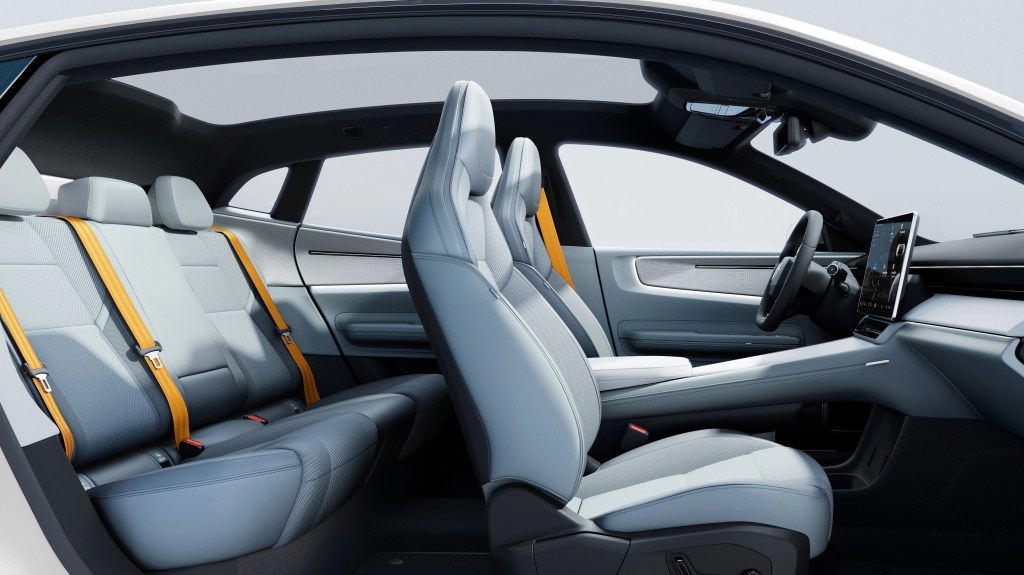
Rearward visibility is handled by a high-definition camera, with the display screen occupying a space where a rear-view mirror would ordinarily be positioned. This in itself isn’t new technology, but so far it’s only been used to augment a conventional mirror/rear window arrangement.
Even before the Polestar 4’s reveal, automotive chatter on social media has raged for several years about mirrors being replaced by cameras and screens, with debate usually concentrating upon how quickly and easily a driver can interpret distance on a two-dimensional display compared with a three-dimensional reflection.
Okay, so what’s the door question about?
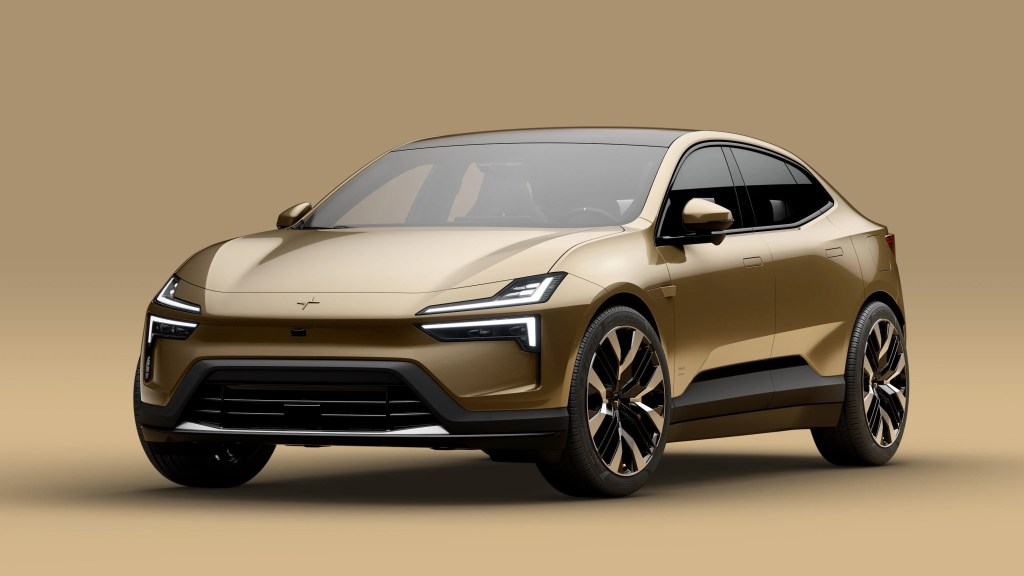
With four side doors, an elevated stance and an aggressively tapered roofline, I’m comfortable categorising the Polestar 4 as an SUV coupé. I’ll give you a moment to wipe the tea you’ve just spluttered off your screen…
Yes, I’m aware that some will regard that as doubly oxymoronic, but we’ll save that debate for another day, because more important here is the question about door numbers – specifically in relation to the one that accesses the boot.
For decades, UK terminology applied to car bodies has typically meant that if a window is part (or the whole) of the opening panel then it’s considered a door, and if it doesn’t it isn’t.

Applying that convention to cargo space access means if the opening panel is glazed, then it’s a door – a tailgate, specifically – but if not, then it’s a boot lid.
So, while on paper, by dint of it being glass-free, the Polestar 4 has a boot lid, making it a four-door car, that doesn’t sit well with me, hence my proposal for a door-count category purely for rear screen-less cars.
This is the kind of clarity that salves my soul – please continue
Just as the existing glass-presence check convention for doors is a relatively straightforward notion for industry folk and the general public alike, a rule for cars without rear windows needs to be as easy to grasp as possible.
To set the scene, imagine you are stood behind a car without a rear windscreen and have fully opened the boot:
- If through the opening you can see into the car’s passenger space and can pass items directly into it, then you’ve opened a tailgate, meaning that if its design is otherwise conventional, it will have an odd number of doors.
- If through the opening you can only see the back of the rear seats and can only pass items directly into the passenger space if they are designed to fold over, then you’ve opened a boot lid of a car with an even number of doors.
Ergo, the Polestar 4 is a five-door car.
Crisis averted. Time for another cuppa (Yorkshire Tea, natch).


 The Joy Of Specs
Leave a reply to Paul Horrell Cancel reply